
rice to water ratio calculator
Rice to Water Ratio Calculator: The Complete Expert Guide for Every Rice Type and Cooking Method
Created by: Ford Lewis
Getting the Rice-To-Water Ratio right is the single most important factor in cooking perfect rice. Too much water makes rice mushy and clumped. Too little leaves it hard and undercooked. This guide gives you approximate, expert-tested ratios for all 14 major rice varieties across every cooking method — from stovetop to Instant Pot — so you never have to guess again.
THE CALCULATOR
Rice to Water Ratio Calculator
Choose your rice, enter your amount, and pick your cooker — get the exact water amount instantly.
Ratios based on expert kitchen testing — adjust ±1 tbsp per cup of rice to taste & altitude.
Rice-To-Water Ratio may vary for different brands since different brands absorb water slightly differently.
USAGE
How to use the rice to water ratio calculator
To find out how much water you need for your rice and how long to cook
QUICK ANSWERS
The Most Common Rice-to-Water Ratios
For white long-grain rice — the most common variety — the ratio is: 1 cup rice to 1½ cups water on the stovetop, and less water when using a rice cooker or pressure cooker. Below are the four most-searched ratios, by cooking method.
White Long-Grain Rice: Water Ratios by Method
For every 1 cup of dry white rice, use this much water:
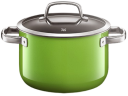 STOVETOP — pot, simmer & cover
1/1/2 CUPS
1:1.5 ratio
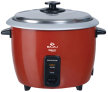 RICE COOKER — basic (single switch)
1/1/4 CUPS
1:1.3 ratio
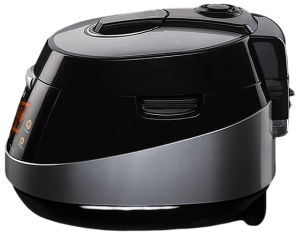
 RICE COOKER — fuzzy logic / induction
1/1/8 CUPS
1:1.15 ratio
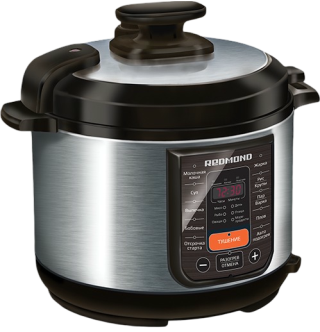
 PRESSURE COOKER — pot or electric
1 CUP
1:1 ratio
Key insight: The same rice needs different amounts of water depending on how you cook it. A pressure cooker needs 33% less water than stovetop cooking because the sealed lid traps all the steam. Smart rice cookers need 8–12% less water than basic models due to more precise heat control.
COOKING METHOD
Why Cooking Method Changes the Rice-to-Water Ratio
The rice-to-water ratio is not just about the rice — it is about how much water evaporates during cooking. Different cooking methods lose different amounts of steam, which is why the same rice can need very different water amounts.
The Four Methods, Explained
Stovetop (Regular Pot)
Even with a tight lid, steam escapes through gaps. This is the baseline — all other methods use less water because they retain more steam. Cook time: 15–45 min depending on rice type.
Basic Rice Cooker
Single-button models have a sealed environment but a loose thermostat that cycles on and off. They lose slightly less water than stovetop. Ratios run about 10–15% lower.
Fuzzy Logic / Induction (IH) Cooker
Smart cookers (Zojirushi, Cuckoo, Tiger IH) regulate temperature precisely, holding a steadier simmer with minimal steam loss. Need 8–12% less water than basic models.
Pressure Cooker / Instant Pot
Sealed under pressure, almost no water evaporates. Works the same for both stovetop pressure cookers and electric models like Instant Pot. Needs the least water of all — often a 1:1 ratio.
RATIOS
White Rice Water Ratios
White rice is the most widely consumed grain in the world. Within the “white rice” category, there are five main varieties, each with a slightly different ideal ratio due to differences in grain size, starch content, and density.
Long-Grain White Rice (including regular white rice)
The most common rice in North America, Europe, and many other regions. Cooks up fluffy with separate grains. The standard 1:1.5 stovetop ratio works well here.
Jasmine Rice (Thai Fragrant Rice)
Jasmine rice is a long-grain variety with a floral aroma. It uses the same ratio as long-grain white rice but requires no soaking. Cook it on the lowest possible simmer for the best texture.
Basmati Rice (Indian Long-Grain)
Basmati uses the same ratio as jasmine, but soaking for 20–30 minutes before cooking is highly recommended. This allows the long grains to fully elongate during cooking, producing the classic “needle-like” basmati texture.
Medium-Grain White Rice
Used in paella, risotto-style dishes, and Japanese cuisine (outside of sushi). Slightly stickier than long-grain. Requires slightly less water (1:1.4 stovetop) because higher starch content absorbs water faster.
Short-Grain / Sushi Rice
The stickiest white rice — essential for sushi, onigiri, and Korean cuisine. Rinse repeatedly until the water runs clear to remove excess surface starch. Uses the least water of all white rices (1:1.2 stovetop).
Brown Rice Water Ratios
Brown rice still has its outer bran layer intact, making it more nutritious but also denser and slower to absorb water. It requires significantly more water (typically 1:2 on the stovetop) and longer cook times (40–45 minutes stovetop, versus 15–18 for white rice).
The bran layer acts as a barrier that water must penetrate before the starchy interior can absorb it — this is why the ratio is higher and the cook time is longer. Soaking brown rice for 30–60 minutes before cooking can reduce cook time by 5–10 minutes.
Brown rice tip: A pressure cooker or Instant Pot is the best way to cook brown rice — it cuts the cook time from 40–45 minutes to just 20–22 minutes while delivering more consistent results, especially for long-grain brown rice.
Specialty Rice Water Ratios
Specialty rices vary widely in water requirements, from sticky/glutinous rice (the lowest at 1:1.1) to wild rice (the highest at 1:3). Each has unique characteristics that affect how much water it needs.
Wild Rice (1:3 stovetop)
Wild rice is technically a grass seed, not a true rice. Its hard outer hull requires dramatically more water and longer cooking. The striking dark colour and earthy flavour make it worth the extra time.
Black Rice (Forbidden Rice) (1:1.75 stovetop)
High in anthocyanins and antioxidants. Turns a beautiful deep purple when cooked. Uses less water than brown rice despite having its bran intact, because the bran layer is thinner.
Red Rice (1:2 stovetop)
Bhutanese and Camargue red rice both have unmilled red bran layers similar to brown rice. Treat them like brown rice for ratio purposes. Earthy, nutty flavour with a firm bite.
Parboiled / Converted Rice (1:2 stovetop)
Partially cooked under pressure before milling, which makes the grain firmer and almost impossible to overcook. Ideal for beginners, large batches, and rice salads where firm, separate grains are essential.
Arborio / Risotto Rice (1:2.5 stovetop)
Very high starch content. These ratios apply to absorption-style cooking only — traditional risotto uses a ladle-by-ladle method. In a pressure cooker, arborio makes excellent rice pudding.
Glutinous / Sticky Rice (1:1.1 stovetop)
The lowest water ratio of any rice variety. Despite being called “glutinous,” it contains no gluten — the name refers to its sticky texture. Soak for 4+ hours before cooking. Traditionally steamed (using no added water), so absorption ratios will vary by pot and heat.
CHART
Master Reference Chart: All 14 Rice Varieties
All ratios are parts water per 1 part rice, by volume. Expert-tested across equipment types.
TIPS
Pro Tips for Perfect Rice Every Time
Rinse (most rice types)
Rinse white rice, jasmine, basmati, and sushi rice until water runs clear. Removes surface starch that causes clumping. Skip for parboiled rice.
Start high, finish low
Bring to a full boil first, then immediately reduce to the absolute lowest simmer. High heat after the initial boil leads to burned bottoms and uneven cooking.
Never lift the lid
Steam that escapes cannot be replaced and will throw off the ratio. Use a glass lid if you want to check, or simply trust the timer.
Always rest after cooking
Remove from heat, keep the lid on, and rest for 10 minutes. This allows residual steam to redistribute evenly and firms up the texture.
Fluff with a fork, not a spoon
A fork separates grains gently without crushing them. A spoon compresses and mashes the top layer.
Adjust for high altitude
Above 3,000 ft (900 m), add 1–2 extra tablespoons of water per cup and increase cook time by 3–5 minutes. Water boils at a lower temperature, slowing absorption.
Salt and fat are optional but helpful
A pinch of salt (½ tsp per cup) and a small knob of butter or oil improves flavour and helps grains separate. Add to the water before cooking.
Use the same measuring tool
Always measure both rice and water with the same cup. Switching between a “rice cup” (180 ml) and a standard cup (240 ml) is a common source of error.
Common mistake: Using the small cup that comes with a rice cooker (usually 180 ml / ¾ standard cup) to measure water in a standard recipe. Always check which cup size your recipe is based on.
Final Thoughts
The rice-to-water ratio is not a single fixed number — it depends on the rice variety and the cooking method. White rice on the stovetop uses 1:1.5, while wild rice needs 1:3. The same white rice needs only 1:1 in a pressure cooker. Smart rice cookers sit in the middle, needing 8–12% less water than basic models due to their precise temperature control.
The key principles to remember: rinse most rice before cooking, never lift the lid mid-cook, always rest for 10 minutes after cooking, and adjust for high altitude by adding a little extra water and time.
FAQs
Common FAQs
Should I rinse rice before cooking?
Yes, for most varieties. Rinsing removes excess surface starch, which is the main cause of sticky, gluey rice. Rinse white rice, jasmine, basmati, and sushi rice under cold water until it runs clear (usually 2–3 rinses). Brown rice benefits from a quick rinse. Skip rinsing for parboiled rice, arborio, and wild rice.
What is the standard rice-to-water ratio?
The standard rice-to-water ratio for white long-grain rice on the stovetop is 1 : 1.5 (1 cup rice to 1½ cups water). This is the most widely cited ratio. It varies by rice type — brown rice needs 1:2, sushi rice needs 1:1.2 — and by cooking method. A pressure cooker needs only 1:1 because almost no water evaporates in a sealed pot.
Why does a fuzzy logic rice cooker need less water than a basic model?
Fuzzy-logic and induction heating (IH) rice cookers use microcomputer sensors to maintain a steady, precise simmer throughout the entire cook cycle. Basic single-switch cookers cycle their heating element on and off more erratically, losing more steam through temperature fluctuations. The result: smart cookers need 8–12% less water than basic models for the same rice variety.
Does the ratio change when cooking large quantities of rice?
The ratio itself stays the same — multiply both ingredients proportionally. However, for very large stovetop batches (above 4–5 cups dry rice), you may find you need slightly less water, as a full pot has proportionally less surface area exposed to the lid edge. Reduce by 1–2 tablespoons per extra cup beyond 4 cups as a starting point.
What is the rice-to-water ratio in grams and ml?
For white long-grain rice on the stovetop: 1 cup (185 g) of dry rice to 355 ml (1.5 cups) of water. For a basic rice cooker: 185 g rice to 307 ml water. For a smart cooker: 185 g rice to 272 ml water. For a pressure cooker: 185 g rice to 237 ml water. Use our calculator to get exact gram and ml amounts for any quantity.
Why do ratios differ?
Different rice absorbs different amounts of water. Brown rice needs more than white; basmati and jasmine need a little less.