
The Ultimate Guide to Basmati Rice
The Ultimate Guide to Basmati Rice (2026): Types, Nutrition & How to Cook It Perfectly
THE BASICS
What Is Basmati Rice?
The world’s most aromatic long-grain rice is only grown in the foothills of the Himalayas. True basmati can only be grown in specific regions of India and Pakistan, where the soil and mineral-rich glacier water from Himalayan rivers and the climate of the Himalayan foothills are responsible for its irreplaceable fragrance.
What sets basmati apart from the rest of the rice isn’t just its elegant, slender grain or its light, fluffy texture after cooking. It’s the unmistakable fragrance — often compared to the scent of popcorn or toasted nuts.
Coming from the Hindi Sanskrit word vasmati, meaning “fragrant one” Or “full of aroma”. The secret behind basmati’s distinctive aroma is a compound called 2-acetyl-1-pyrroline (2-AP), which is also found in bread crust and popcorn — explaining that warm, nutty smell when basmati cooks.
Here’s everything that makes it special.
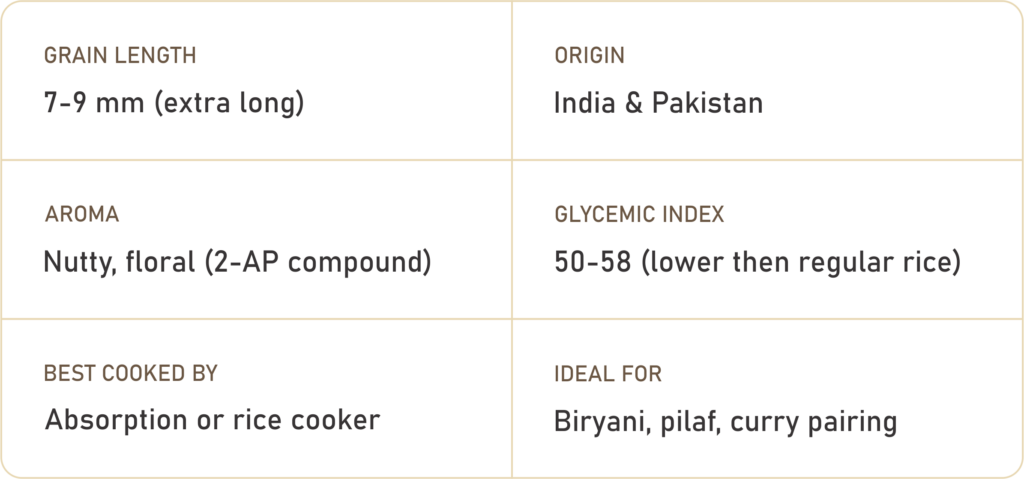
When cooked correctly, each grain of basmati elongates to nearly double its raw length and remains separate — never sticky or clumping. This is why it’s the rice of choice for dishes like biryani, pilaf, and any meal where the rice itself needs to shine. Compare this to jasmine rice, which is slightly stickier and better suited to stir-fries and Thai dishes.
There are two main types available in the US: Indian basmati (slightly more floral, longer grain) and Pakistani basmati (often described as nuttier, with a firmer bite). Both are excellent — your choice depends on the dish you’re making and your personal taste. See our full best basmati rice guide for a ranked comparison of both.
History and Origins of Basmati Rice
Basmati rice has a history as rich as its aroma. Archaeologists have discovered a type of long-grain rice near Udaipur, India dating back to between 2000 and 1600 BC, believed to be an ancestor of modern basmati. Ancient Sanskrit texts referred to it as “Vasumati”, meaning “fragrant” — a name that has held for millennia.
For centuries, basmati was cultivated in the fertile plains of Punjab, nurtured by the waters of the Indus and Ganges river systems. It became synonymous with royal cooking, featured prominently in Mughal-era dishes like biryani, which remains one of the most celebrated rice dishes on the planet.
Today, India accounts for roughly two-thirds of the world’s basmati supply, with Pakistan being the other major producer. Together, these two nations export basmati to over 150 countries, making it a true global staple.
BUYING GUIDES
Find the right basmati rice
Not all basmati is equal. We’ve tested dozens of brands available in the market so you don’t have to.
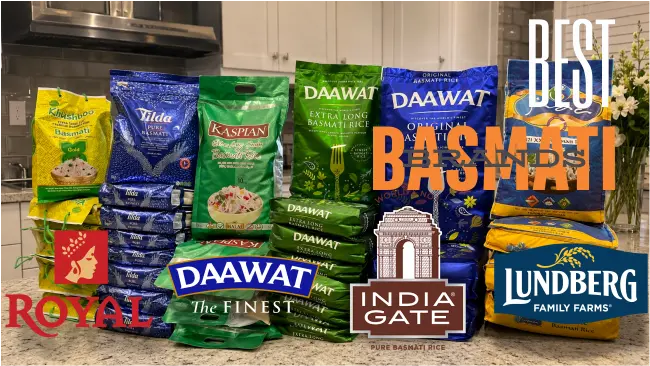
Best Basmati Rice Brands on Amazon – Tested & Ranked BASIC Every bag of basmati rice sold on Amazon promises “aromatic, fluffy, long-grain rice.” But almost none of them explain what separates a naturally aged, Himalayan-origin basmati rice from a generic long-grain rice, packaged in a fancy label. We bought and cooked the most popular…
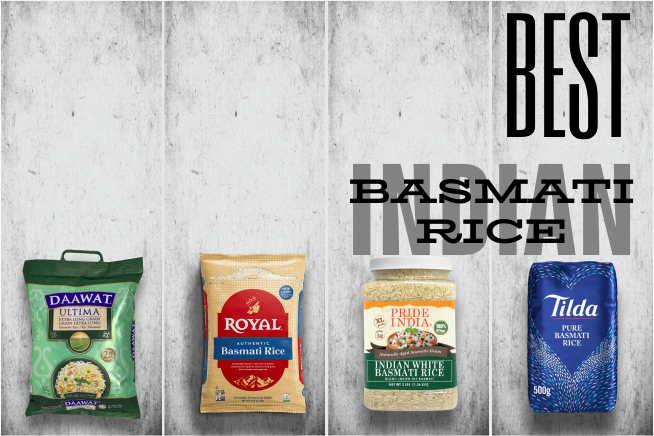
Indian Basmati Rice Brands: Top Picks for Authentic Taste and Aroma Indian Basmati Rice is not only known for its long grains, distinct aroma, and fluffy texture, it’s an experience of culture, flavor, and tradition. Basmati rice, known as the “queen of fragrance,” plays a starring role in classic dishes like biryani, pulao, and kheer.…

Daawat Basmati Rice – Aroma, Flavor, and Perfection in Every Grain When it comes to premium Basmati rice, Daawat Basmati Rice is a name synonymous with excellence, heritage, and premium quality. Celebrated around the world for its distinct aroma, long grain, and fluffy texture, Daawat has become a household staple and a chef’s favorite for…
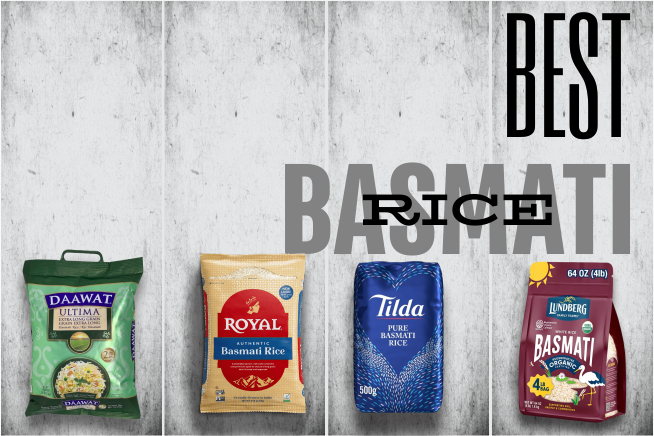
Best Basmati Rice: A Guide to Premium, Fragrant Rice for Every Dish Basmati rice is prized for its long grains, distinct aroma, and delicate flavour, making it a staple in many kitchens around the world, particularly in Indian, Pakistani, and Middle Eastern cuisine. Originating from the Indian subcontinent, it’s widely used in dishes like biryani,…
How to Buy the Best Basmati Rice
Shopping for basmati can be overwhelming with so many brands and varieties. Use this checklist:
WHAT TO CHECK | WHAT TO LOOK FOR |
Grain length | Extra-long or long grains; uniform size |
Age | “Aged,” “matured,” or “1–2 year aged” on label |
Certification | GI-tagged (Geographical Indication); export quality seal |
Color | Bright white / cream; consistent color throughout |
Aroma (raw) | Subtle nutty or earthy scent even before cooking |
Packaging | Airtight; resealable; clear information on variety and origin |
Price | Premium price often signals authentic, aged basmati |
RICE COOKER GUIDE
The best rice cooker for basmati rice
Cooking basmati in a rice cooker gives you perfect, fluffy results every time — but not every cooker handles basmati’s longer grains well. These are our tested picks.
Best Zojirushi Rice Cookers for Authentic Sushi Rice at Home By FORD LEWIS Sushi rice is the heart of every Japanese cuisine. Cooking sushi rice isn’t just about boiling rice. It is about precision, texture, and consistency. Sushi rice must be tender yet firm, slightly sticky without being mushy, and evenly cooked. Sushi rice has unique…

Are Expensive Rice Cookers Worth the Hype? Or the cheaper ones are just as good. By FORD LEWIS Choosing the best rice cooker can be confusing, given that there are many options available today. However, the right rice cooker can completely change your cooking experience. It saves time, ensures perfect texture, and reduces the stress of…

The Ultimate Guide to Buying a Compact Rice Cooker for Small Kitchens By FORD LEWIS Updated December 15, 2025 With the growing demand for convenience and space-saving appliances, compact rice cookers have become an essential kitchen appliance for individuals and families who value convenience, efficiency, and space-saving design. Unlike bulky models, these compact rice cookers are…

The Most Reliable Rice Cooker For Brown Rice Worth Buying By FORD LEWIS Updated October 20, 2025 Ever wondered why brown rice seems so stubborn to cook? The answer lies in its grain layers. Unlike white rice, brown rice retains its outer bran and germ layers. These layers act as a protective layer around the grain,…

Best Rice Cooker Under $100: Your Guide to Perfectly Cooked Rice Finding the right rice cooker can be a daunting task. Especially if you’re a fan of perfectly cooked rice and every time you want to make fluffy basmati rice, sticky sushi rice, or brown rice. A good rice cooker can make all the difference.…

Stop Ruining Jasmine Rice – Here Are the Best Rice Cookers For Jasmine Rice to Fix That Jasmine rice is a long-grain, fragrant variety whose, slightly sticky yet fluffy, texture and floral aroma requires a perfect balance of heat, timing and water ratio. Standard stove top pots fails to provide consistent temperature and pressure, resulting…
WHY BASMATI NEEDS SPECIFIC COOKER SETTINGS
- Basmati grains are longer and denser than standard long-grain rice — they need more time to absorb water fully
- The best cookers have a dedicated “basmati” or “long grain” mode that adjusts temperature and timing accordingly
- Fuzzy logic cookers (like Zojirushi) sense grain moisture and adjust automatically — ideal for basmati
- Avoid basic on/off cookers for basmati — they often undercook the center of the grain
COOKING GUIDE
How to cook basmati rice perfectly
Fluffy, separate, aromatic grains every time — follow these steps exactly and you’ll never have gluey basmati again.
Rinse until the water runs clear
Place raw basmati in a fine-mesh strainer and rinse under cold water for 60–90 seconds, agitating the grains with your hand. This removes excess surface starch that causes clumping. The water will go from cloudy white to nearly clear — that’s when you’re done.
Soak for 30 minutes (optional but highly recommended)
Cover rinsed rice with cold water and let it soak for 20–30 minutes. Soaking allows the grain to absorb some water before cooking, which helps the center cook through without the outside becoming mushy. Skip this step if you’re in a hurry — the result is still good, just not as elongated.
Use the correct water ratio
The standard ratio is 1 cup basmati : 1.5 cups water for stovetop. If you soaked the rice, reduce to 1 : 1.25. For a rice cooker, use 1 : 1.5 regardless. Use our ratio calculator below to get the exact amounts for your serving size.
Bring to boil, then simmer on lowest heat
Bring water and rice to a boil over medium-high heat. The moment it boils, place a tight-fitting lid on the pot, reduce heat to the lowest possible setting, and cook for exactly 12 minutes. Do not lift the lid — the steam inside is finishing the cook.
Rest for 10 minutes, then fluff
Remove from heat and let the pot sit, still covered, for 10 minutes. This rest period redistributes the moisture and lets each grain finish steaming. After 10 minutes, remove the lid and fluff gently with a fork — never a spoon. Serve immediately.
Comparing Different Cooking Methods
Method | Water Ratio | Time | Best For |
Stovetop Absorption | 1 : 1.5 | 15-18 min + 5 min rest | Everyday cooking; most control |
Rice Cooker | 1 : 1.5 | 20-25 min auto | Busy Kitchens; individuals |
Instant Pot | 1 : 1 | 5 min HP + 10 min NR | Consistent Fast results |
Oven (Large Batches) | 1 : 1.75 | 25 min at 175 C/ 350 F | Cooking for Crowds |
Boil & Drains | Large Pot | 10-12 min | Biryani |
RECIPES
Basmati rice recipes
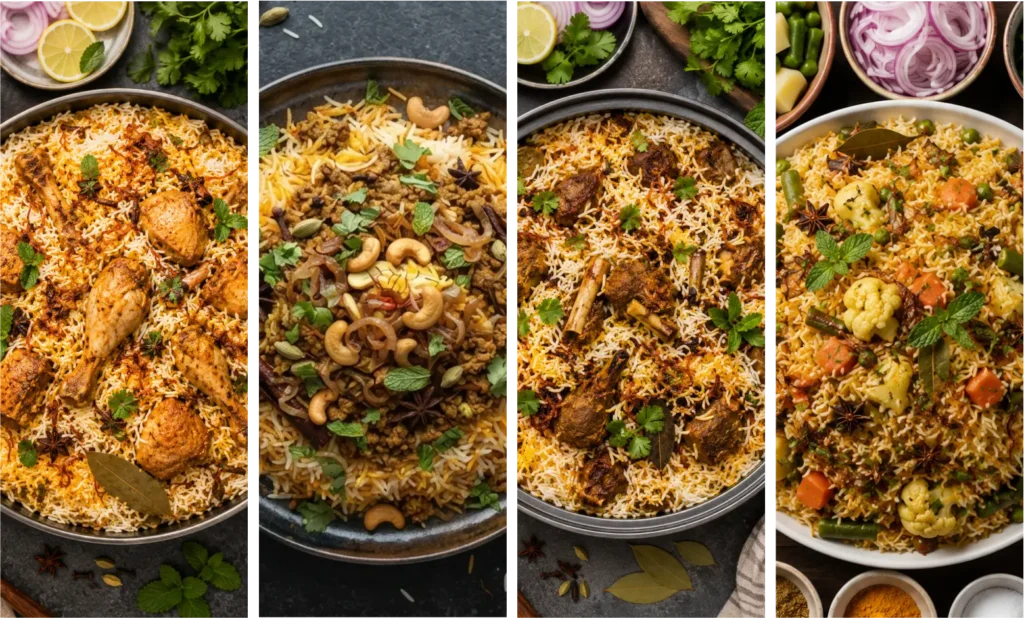
Basmati’s long, fluffy grains and gentle nutty aroma make it perfect for dozens of cuisines. Here are some of the most popular versatile dishes that use basmati rice as their key ingredient.

Classic chicken biryani
75 min · Serves 4

Beef Basmati rice
25 min · Serves 4

Egg rice
20 min · Serves 2

Vegitable rice
30 min · Serves 4
EXPERT COOKING TIP
- For biryani, always par-cook basmati to 70% done before layering — it finishes cooking in the pot with the meat
- Add a pinch of salt and a teaspoon of oil to the cooking water to keep grains separate and give them a gentle sheen
- Stored leftover basmati? Revive it by sprinkling 2 tbsp water over it and microwaving covered for 90 seconds
TYPE
Types of Basmati Rice
Not all basmati is created equal. Understanding the different types helps you pick the right one for your dish and budget.
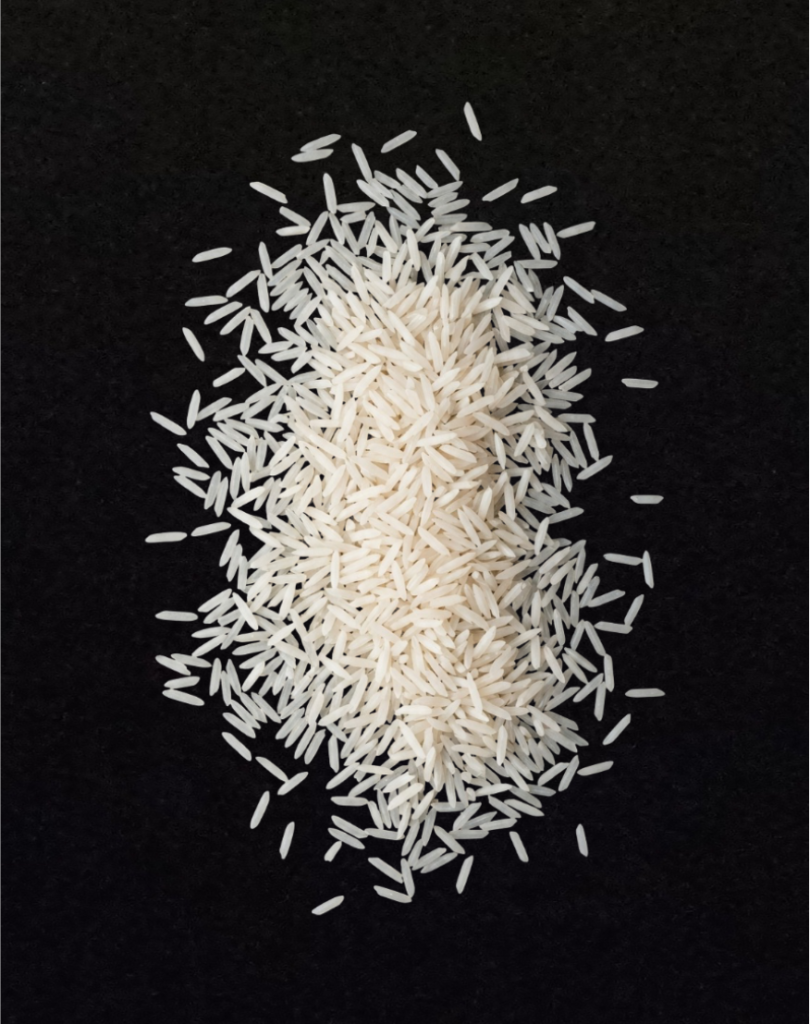
WHITE BASMATI RICE
The most widely available variety. The hull, bran, and germ are all removed during milling, resulting in smooth, white grains that cook quickly and have a light, fluffy texture. Best for everyday cooking and special dishes like biryani and pulao. Quick to cook (15–18 min), mild flavor, and the easiest to find in any supermarket.
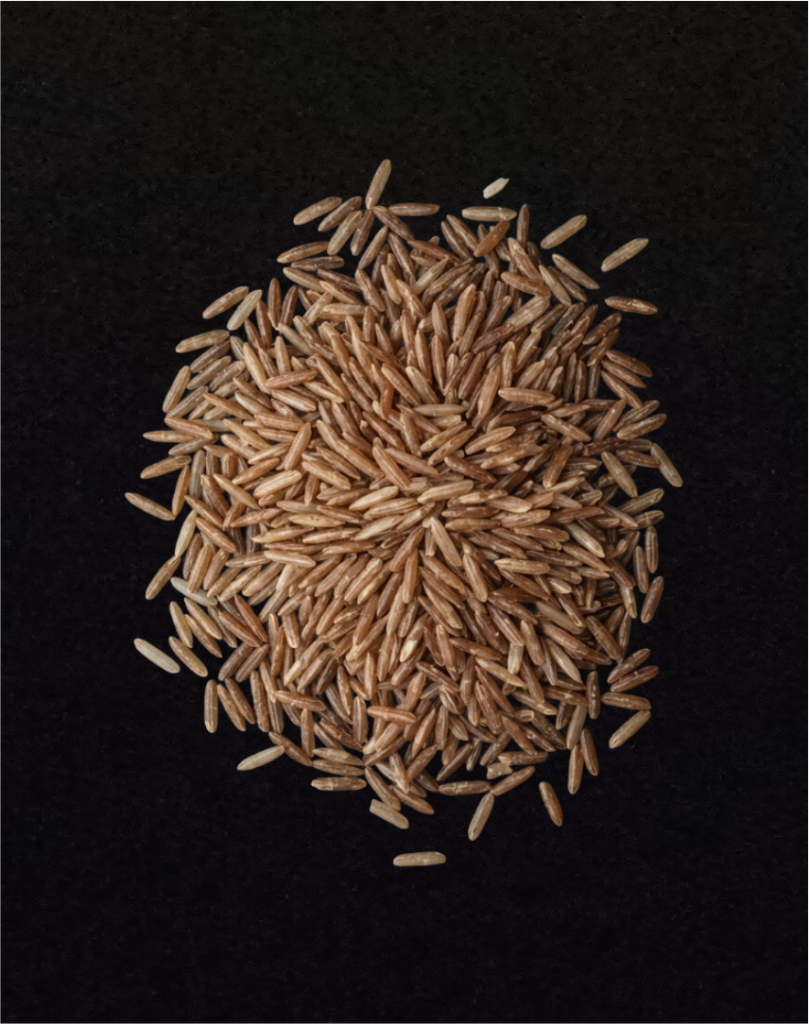
BROWN BASMATI RICE
Only the outer hull is removed, leaving the bran
layer intact. This whole-grain option is higher in
fiber, minerals, and antioxidants. It takes longer to cook (35–40 min) and has a slightly chewier, nuttier texture — but it’s the healthiest choice for those managing weight or blood sugar. Higher in fiber (3–4g vs 0.7g per serving) than white basmati.
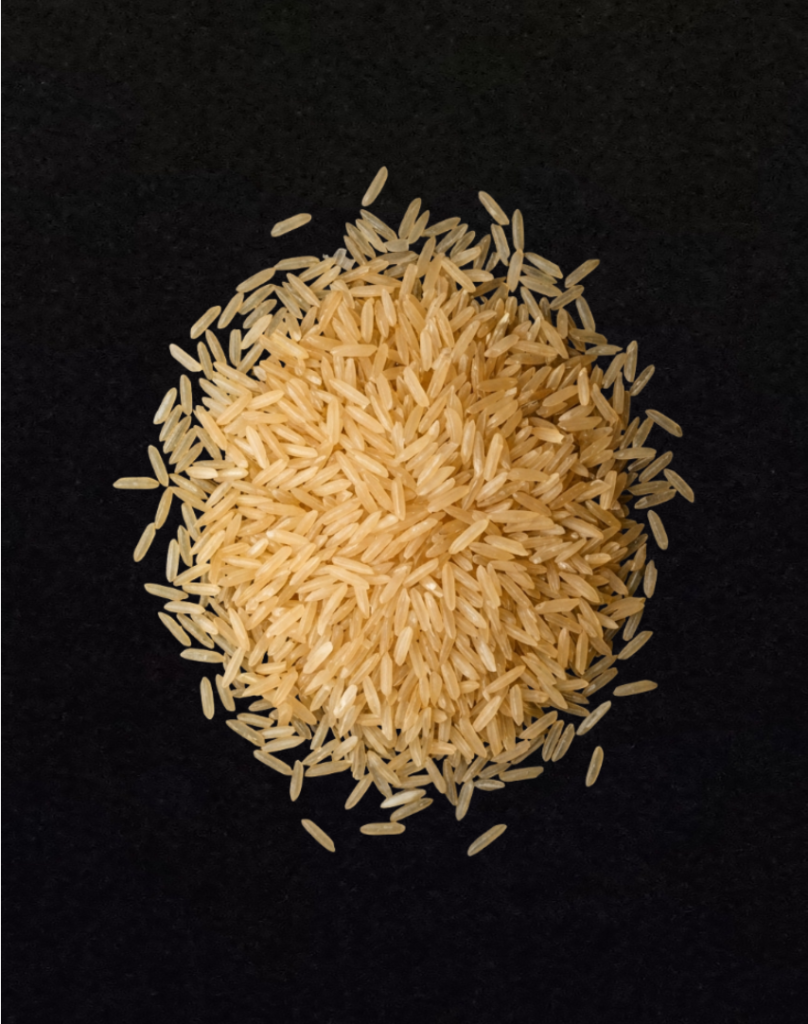
PARABOILED BASMATI RICE
Processed while still in its husk — steam pressure pushes nutrients from the bran into the grain before milling. The result is a distinctive golden-hued rice that retains more vitamins and minerals than white basmati, while still cooking up fluffy and separate. A great middle-ground between white and brown basmati.
COMPARISONS
Basmati Rice vs. Other Rice Varieties
Basmati vs. Jasmine Rice

JASMINE RICE
A Thai aromatic long-grain rice with a floral, slightly sweet scent. Jasmine grains are shorter and stickier than basmati, clumping together after cooking. Ideal for Southeast Asian dishes, stir-fries, and sticky rice preparations. Not suitable for biryani.
Basmati vs. Medium White Rice
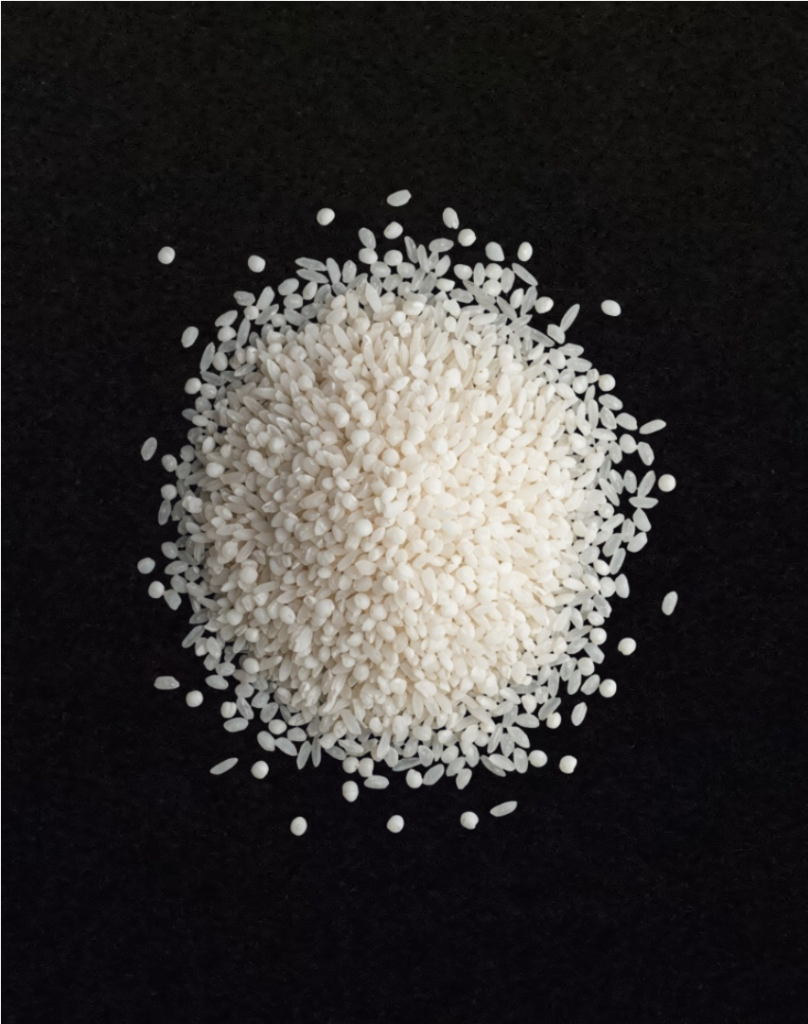
MEDIUM GRAIN RICE
Standard white rice (short or medium grain) is the everyday staple found in Chinese, Japanese, Korean, and Western cuisines. It has a stickier, chewier texture that makes it great for sushi, rice bowls, and sides — but it lacks basmati’s fragrance and has a higher glycemic index.
Basmati vs. Wild Rice

WILD RICE
Technically a grass seed, not true rice, wild rice has a dramatic dark color, a chewy, somewhat crunchy texture, and a bold earthy flavor. It is exceptionally high in protein and antioxidants. It takes 45–60 minutes to cook and is often used mixed with other rices rather than on its own.
Aged basmati rice vs regular basmati
One of basmati’s best-kept secrets is that aging improves quality dramatically. Premium basmati rice is typically aged for one to two years before it reaches shelves. During aging, the grain dries out, which causes it to cook up longer and fluffier, absorb water without becoming sticky, develop a deeper more pronounced aroma, and hold its shape better in dishes like biryani.
Pro Tip: Always check the packaging for “aged basmati” or “matured” labels. Aged rice is worth the premium price for special dishes like biryani — the difference in texture and aroma is remarkable.
Basmati vs other rice varieties
With so many rice types on the market, how does basmati stack up? Here are four head-to-head comparisons with full detail.
Rice type | Grain texture | Aroma | Best for | GI score |
Basmati | Long, separate, fluffy | Nutty, floral | Biryani, pilaf, curry | 50–58 |
Jasmine Rice | Medium-long, slightly sticky | Floral, popcorn-like | Thai dishes, stir-fries | 68–80 |
Brown Rice | Chewy, dense | Earthy, nutty | Bowls, meal prep, health | 50–55 |
Sushi rice | Short, very sticky | Mild, neutral | Sushi, onigiri, rice balls | 72–83 |
Long-grain white | Firm, separate | Neutral | Everyday meals, fried rice | 64–72 |
NUTRITION AND HEALTH
Nutritional Value of Basmati Rice
Here’s what you get in a standard 1 cup (cooked, ~186g) serving of white basmati rice, compared to brown basmati:
Nutrient | White Basmati (1cup) | Brown Basmati (1cup) | % DV (White) |
Calories | ~200 Kcal | ~216 Kcal | |
Carbohydrates | ~45 g | ~45 g | 16% |
Protein | ~4 g | ~5 g | 8% |
Fat | ~0.5 g | ~1.8 g | 1% |
Fiber | ~0.7 g | ~3.5 g | 3% / 13% |
Thiamine (B1) | ~0.2 mg | ~0.2 mg | 15% |
Niacin (B3) | ~2.3 mg | ~3 mg | 14% |
Folate | ~91 mcg | ~8 mcg | 23% |
Magnesium | ~19 mg | ~84 mg | 5% / 20% |
Phosphorus | ~68 mg | ~162 mg | 5% / 13% |
Selenium | ~11.8 mcg | ~19 mcg | 21% |
Iron | ~1.9 mg | ~1 mg | 11% |
Glycemic Index | ~50-58 | ~45-50 |
KEY NUTRITIONAL ADVANTAGE
Basmati rice has a glycemic index (GI) of 50–58, considerably lower than that of standard white rice (~70). This means it raises blood sugar more slowly, making it a smarter carbohydrate choice — especially important for people managing diabetes or insulin sensitivity.
Health Benefits of Basmati Rice
Benefit | Key Mechanism | Best Variety |
Better Blood Sugar Management | Lower GI (50–58); unique amylose structure slows glucose release | Brown > White |
Supports digestive health | Dietary fiber feeds gut bacteria; easy to digest | Brown Basmati |
Naturally gluten-free | No gluten proteins; safe for celiac disease | Any |
Sustained energy | Complex carbs with moderate GI = slow, steady fuel | White or Brown |
Heart-friendly | Low fat, cholesterol-free, sodium-free; bran compounds may aid cholesterol | Brown Basmati |
Rich in B vitamins | Thiamine, niacin, folate for energy metabolism & cell function | White Basmati |
Bone & muscle support | Magnesium and phosphorus for bone density and enzymatic reactions | Brown Basmati |
Better Blood Sugar Management
The lower glycemic index of basmati rice sets it apart from most white rice varieties. Its unique amylose structure causes slower digestion and a more gradual release of glucose into the bloodstream. For people managing Type 2 diabetes or insulin sensitivity, choosing basmati over regular white rice can make a meaningful difference.
Supports Digestive Health
Brown basmati rice is a particularly good source of dietary fiber, which feeds beneficial gut bacteria, promotes regular bowel movements, and supports overall digestive wellness. Even white basmati is easy on the stomach and widely recommended for those with sensitive digestion.
Naturally Gluten-Free
Basmati rice is completely gluten-free, making it an excellent grain option for people with celiac disease or gluten intolerance. It can serve as a safe and delicious alternative to wheat-based staples.
Sustained Energy
As a complex carbohydrate with a moderate GI, basmati provides slow-releasing energy rather than a sharp spike and crash — ideal for active individuals, athletes, and anyone who needs steady energy throughout the day.
Heart-Friendly
Basmati rice is naturally low in fat, cholesterol-free, and sodium-free. Brown basmati contains compounds that may support healthy cholesterol levels and cardiovascular function, thanks to its intact bran layer.
Rich in B Vitamins
White basmati is a good source of thiamine (B1), niacin (B3), and folate — all essential for energy metabolism, nervous system function, and cell growth. Folate is particularly important during pregnancy.
Bone & Muscle Support
Basmati contains magnesium and phosphorus, two minerals vital for bone density, muscle function, and enzymatic reactions throughout the body. Brown basmati provides even higher amounts.
STORAGE
How to store basmati rice
Stored correctly, uncooked basmati rice lasts for years. Stored poorly, it goes stale, loses aroma, and attracts pests within months.
Uncooked basmati should be stored in an airtight container in a cool, dark pantry. Avoid the original bag — once opened, it’s porous, exposing the rice to moisture and air. A good airtight container will keep basmati fresh for 2–3 years. In a sealed container in the freezer, indefinitely.
Cooked basmati must be cooled quickly (within 1 hour of cooking), then refrigerated in a sealed container for up to 4 days. For longer storage, freeze in individual portions — reheat from frozen by adding 2 tbsp water and microwaving covered.
Type | Container | Location | Shelf Life | Notes |
White Basmati (uncooked) | Airtight container | Cool, dry, dark | Up to 2 years | Keep away from strong odors |
Brown Basmati (uncooked) | Airtight container | Cool, dark (fridge ideal) | 6–12 months | Natural oils go rancid; fridge extends life |
Cooked Basmati (fridge) | Airtight container | Refrigerator | 3–4 days | Cool within 1 hour of cooking |
Cooked Basmati (frozen) | Airtight freezer bag | Freezer | Up to 3 months | Portion before freezing; add water when reheating |
FAQ
Common basmati rice questions
The questions our readers ask most — answered directly.
Is basmati rice healthier than regular white rice?
Yes, in most ways. Basmati has a lower glycemic index (50–58 vs ~70), a longer grain with a different starch structure, and a more favorable nutritional profile. Brown basmati is even healthier, providing significantly more fiber and minerals.
What’s the difference between white and brown basmati?
White basmati has its hull, bran, and germ removed — it cooks faster (15–18 min), is lighter in texture, and has a milder flavor. Brown basmati retains the bran layer, giving it more fiber, nutrients, and a nuttier flavor, but it takes longer to cook (35–40 min).
What does “aged” basmati mean?
Aged basmati has been stored for 1–2 years after harvest. This drying process results in grains that cook longer, fluffier, and more separate, with a more pronounced aroma. Aged rice is always preferred for premium dishes.
What is the best basmati rice brand to buy?
Look for aged, long-grain basmati from reputable brands like Tilda, Daawat, India Gate, Royal, or Kohinoor. The best choice depends on your location, budget, and intended dish.
What is the best basmati rice brand in the US?
For most American kitchens, Royal brand and Daawat brand offers the best balance of aroma, grain quality, and easy availability.
Can I cook basmati rice in any rice cooker?
Yes, but results vary. Basic on/off rice cookers often undercook the center of basmati grains because they don’t account for the longer cook time needed. Fuzzy logic cookers with a dedicated “basmati” or “long-grain” setting — like the Zojirushi NS-ZCC10 — consistently produce superior results.